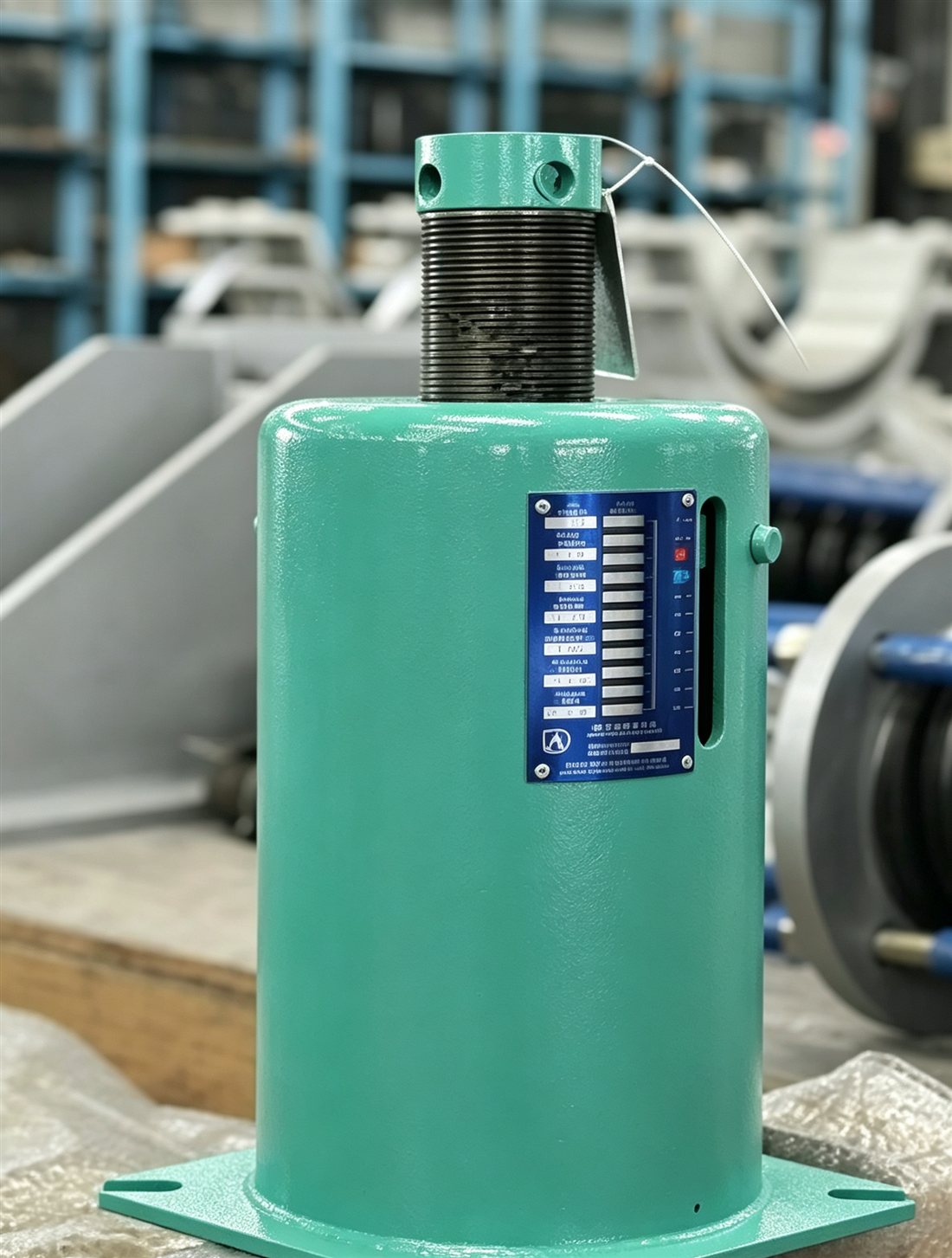
When the line has to be carried from below, the spring goes under the pipe: base plate down to your steel or foundation, load column up to the pipe. Same seamless-casing spring core as our hangers — the load path is simply inverted.
Support or hanger — which one does the location need?
Functionally the two are the same device. The choice is decided by what the site offers at that elevation:
Overhead steel within reach → spring hanger. Suspended on a rod, loaded in tension, self-aligning by gravity.
No attachment point above, or routing near floors, racks and foundations → spring support (this page). The unit stands under the pipe and is loaded in compression through a top load column.
Loads, travels and the sizing method are identical — a schedule can mix both arrangements freely, and we quote them together.
Construction
Coil spring in a seamless press-formed casing — no longitudinal or circumferential welds near the spring, the same housing construction as our hanger series with the selected unit verified against its project load, travel and inspection requirements. On the support arrangement that core is fitted with:
Base plate with anchor holes — bolted or welded to steelwork or foundation; mounting dimensions stated per tag on the data sheet
Threaded load column to the pipe or clamp base, with height adjustment for site tolerances
Load scale marked and calibrated; travel stops fitted for hydrotest
Finish: red-oxide primer, epoxy or hot-dip galvanized to spec
Horizontal movement — the support-specific question
A suspended hanger absorbs small horizontal displacement by letting the rod swing. A base-mounted unit cannot swing — the pipe moves across the load interface instead. For most tags the displacement is small and normal practice covers it; where the stress calculation shows significant horizontal travel, flag it on the schedule and we engineer the guiding or sliding arrangement for that position rather than leave it to site improvisation.
Keep the support tag and drawing revision together. For this arrangement, check the base fixing, load interface and installed height under the pipe. Record unresolved inputs as open items rather than assuming dimensions from a photograph.
Check
Information to compare
Load and movement
Operating load, cold-setting information, travel magnitude and direction from the controlling schedule
Installation interface
Connection dimensions and available installation space on the approved drawing
Selected unit
Product type and size, travel/load markings, and the tag-specific documentation required by the purchase order
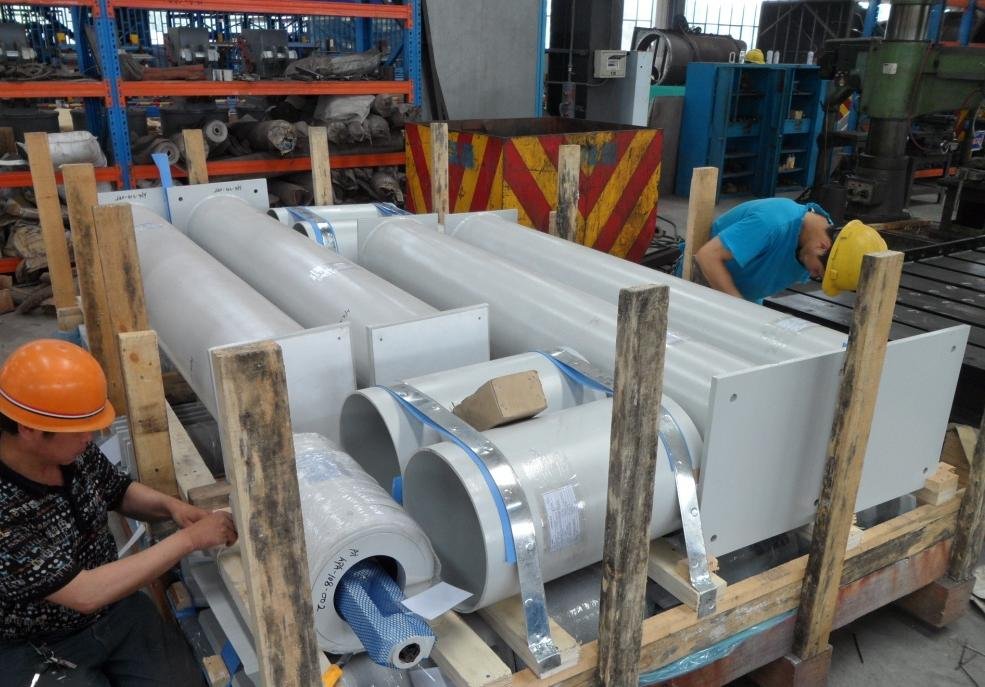
REAL FACTORY PHOTO — PACKING ACTIVITY; NOT PROOF OF A SPECIFIC MODEL OR TEST RESULT
How to get a quote
Send your support schedule (hot load, travel with direction, temperature) plus the available height under the pipe. We size each position, return a data sheet per tag with base and mounting dimensions, and quote as complete assemblies.
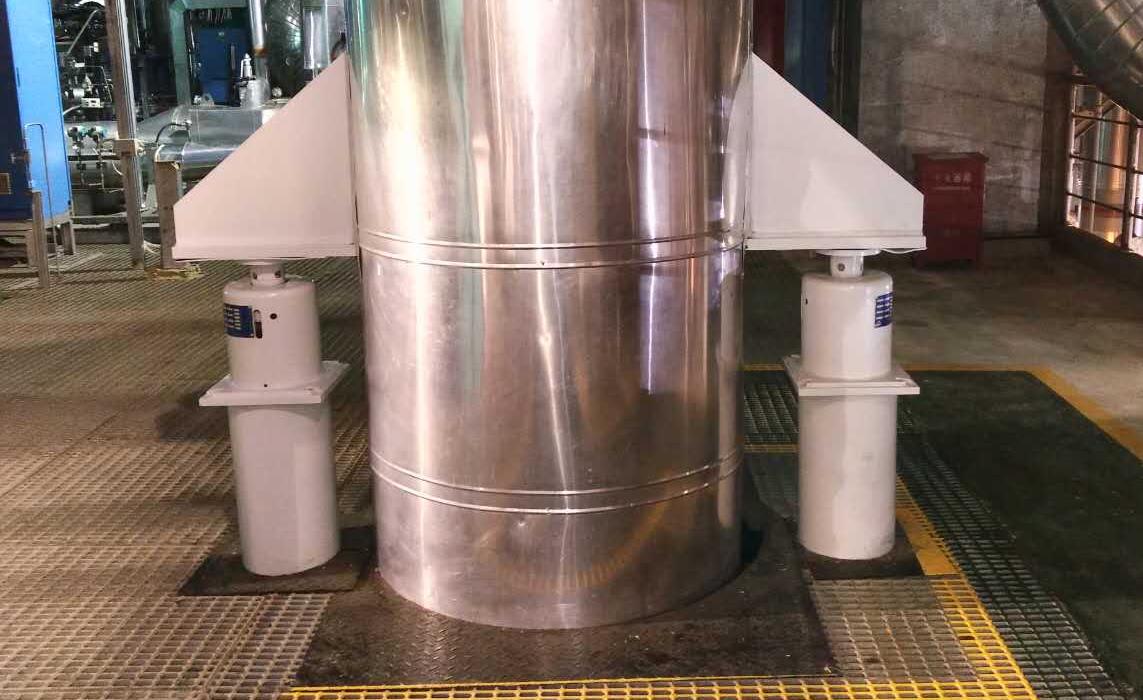
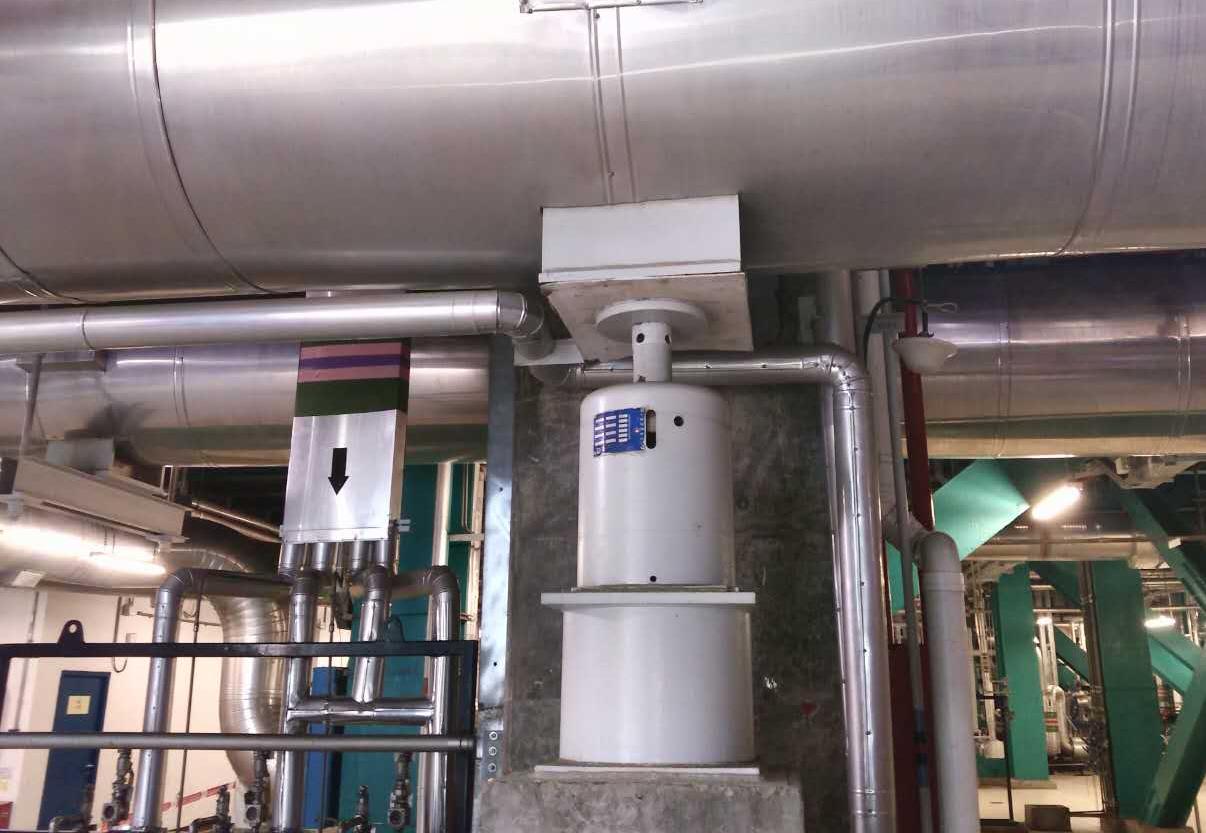
FIG. 01 — BASE-MOUNTED SPRING SUPPORTS, INSTALLEDFIG. 02 — SPRING SUPPORT UNDER A HOT LINE
When is a spring support used instead of a spring hanger?
When the pipe cannot be suspended from above — no overhead steel within reach, routing close to the floor or a foundation, or a rack where supporting from below is simply cleaner. The spring core and sizing method are the same; the load path is inverted.
What information do you need to size a variable spring support?
Hot load, travel with direction, pipe size and temperature, plus the available installation height under the pipe. A support schedule (hanger schedule) or marked-up isometric is ideal — we size each support and return a data sheet per tag with base and mounting dimensions.
What if the pipe also moves horizontally?
Tell us the horizontal displacement when you send the schedule. On a base-mounted unit the pipe slides on the load interface, so where movement is significant we engineer the guiding or sliding arrangement for that tag rather than leave it to chance.
How is the base fixed on site?
The base plate is bolted or welded to the supporting steel or foundation. Base and anchor dimensions are stated per tag on the data sheet so civil or structural work can be prepared before the units arrive.
What documentation is provided with an order?
A data sheet per support tag including mounting dimensions, dimensional and inspection reports, and EN 10204 3.1 material certificates on request, plus export packing documents.
Need this priced?
Send loads, travels and quantities — quotation within 24 hours on working days.